10 Multi Channel Marketing Examples That Scale
Study 10 multi channel marketing examples with channel tactics, creative assets, cadence, KPIs, and lessons for repeatable execution.
Most advice about multi channel marketing examples gets one point wrong. It treats coverage as the goal. It isn't. Publishing the same post everywhere only creates duplicated noise and fragmented reporting.
The best campaigns are coordinated, not copied. Each channel gets a distinct job. Instagram might carry social proof. YouTube might hold the fuller explanation. Email might convert known interest into action. The shared campaign idea stays intact, but the asset, timing, and success metric change with the platform.
That distinction matters because customer behavior is already multi-touch. One large retail survey of 46,000 shoppers found that 73% use multiple channels in their shopping journey, and omnichannel shoppers use an average of six touchpoints before purchase, as summarized in this omnichannel retail statistics roundup. The practical implication is simple. Your reporting model has to follow the journey buyers take, not the org chart your team happens to use.
A useful way to study multi channel marketing examples is to treat each one like an operating system. Look at audience role, channel function, creative assets, cadence, KPIs, operational friction, and the brief to creative to schedule to analytics loop. That is also where an autonomous agent can help. With Crowbert features, a team can centralize drafting, approvals, channel-aware formatting, scheduling, and reporting while keeping explicit human approval in control.
If you're building your own system, start with understanding attribution data. Then study the examples below as workflow designs, not just brand stories.
Table of Contents
1. Coca-Cola's Integrated Holiday Campaign Across Social, Digital, and Retail

Coca-Cola's holiday campaigns work because the channels don't all carry the same creative burden. Instagram and TikTok carry participation and remix culture. YouTube carries the fuller emotional story. Facebook carries broader reach for known audiences. Retail and in-store placements close the loop with physical recall.
The interesting part isn't the seasonal theme. It's the division of labor. A shared visual system, recurring phrases, creator participation, and retail tie-ins create recognition without forcing identical posts across every surface. That's the pattern many teams miss when they search for multi channel marketing examples.
How the operating system works
User-generated content and hashtag structures usually play the connective role. Trend participation on TikTok can refresh the campaign without rewriting the campaign. In-store displays then reinforce what people already saw online, which reduces the burden on any single digital touchpoint to do everything at once.
The bottleneck is rarely ideation. It's approval and asset routing. Holiday campaigns often stall because teams approve copy, video cuts, retail creative, and creator guidance in separate systems. A tighter workflow starts with one campaign brief, then maps variants by channel behavior, publishing window, and sign-off owner. A marketing campaign planning template helps when that orchestration starts to sprawl.
Useful KPIs here are qualitative unless a brand publishes audited results. Track hashtag participation, UGC volume, engagement quality, retail redemption signals, and channel-level conversion where attribution is available. Don't overstate certainty. Holiday campaigns usually create shared lift across channels, and exact contribution is often hard to isolate.
2. Nike's Athlete-Centric Content Distribution Across Instagram, YouTube, and TikTok
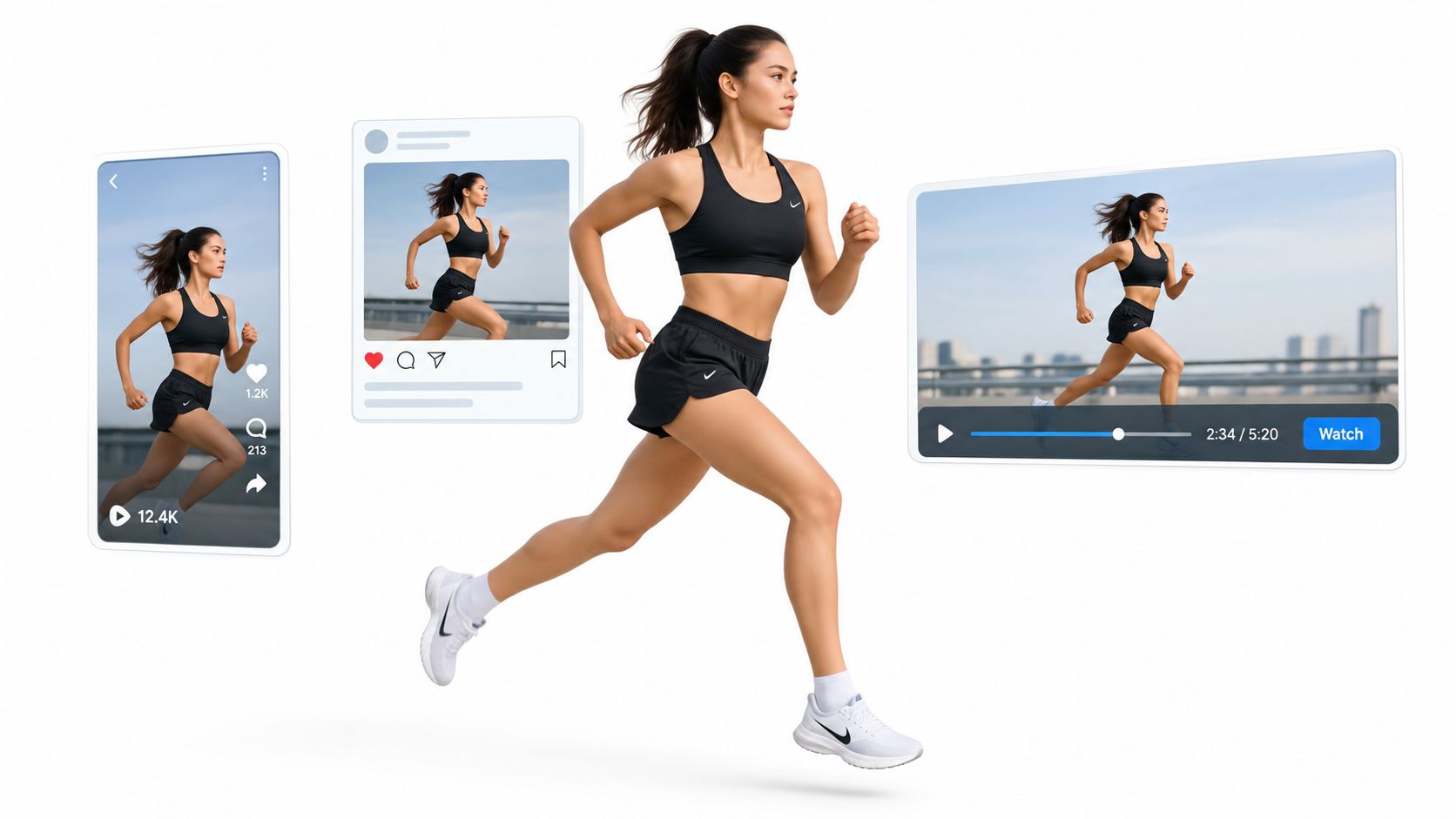
Nike shows the value of building around source footage rather than isolated posts. One athlete shoot can produce a documentary-style YouTube cut, short motivational edits for Reels and TikTok, training snippets for Stories, and stills for follow-up creative. The assets feel native because the edit changes with the environment.
That model scales because the brief starts upstream. Instead of asking, "What should we post on TikTok today," the team asks, "What story are we capturing, and which moments belong on which platform?" That sounds simple, but it changes production planning, shot lists, and edit priorities.
What transfers from the example
The best part of this system is production efficiency with controlled variation. If the team shoots vertical, horizontal, and square-ready footage in the same session, post-production gets easier later. Regional edits and athlete-specific copy can then branch from the same asset library.
The trade-off is overhead after the shoot. More outputs mean more review rounds, more metadata, more caption changes, and more schedule decisions. That's where a coordinated asset map matters more than a bigger editing budget. A clear content distribution workflow reduces the common problem of one hero video generating too many disconnected derivatives.
A useful KPI stack here is channel-specific. Watch time and completion on YouTube. Hold rate and saves on short video. Discovery comments and profile visits on Instagram and TikTok. Then a second layer asks whether people move between platforms at all. Cross-platform audience movement is often the hidden value in athlete-led content.
3. HubSpot's Educational Content Funnel Across LinkedIn, YouTube, and Email
HubSpot is a good example because the channels reflect buyer intent instead of media habit. LinkedIn works as a professional awareness layer. YouTube supports active learning. Email moves known interest toward qualification or action. The campaign isn't just content repurposing. It's a staged movement from curiosity to commitment.
This pattern is especially useful in B2B because a social reaction and a qualified lead are not the same thing. Teams that confuse them usually overvalue reach and undervalue sequence.
Intent map and KPI logic
An educational funnel works best when each asset answers a different buyer question.
- LinkedIn for relevance: Introduce the theme, frame the problem, and earn professional attention.
- YouTube for depth: Show the workflow, teach the concept, or explain the method in a way social posts can't.
- Email for timing: Follow up when someone has shown enough intent to justify a more direct ask.
That sequence gets stronger with strict tracking discipline. Use consistent UTMs, topic clusters, and campaign naming. If you're also tightening inbox performance, an email deliverability guide is worth pairing with the content plan.
A practical workflow starts with one research asset, then branches into LinkedIn posts, a YouTube script, and an email sequence. Marketing automation in practice matters here because the friction is not just publishing. It's moving from draft to approval to follow-up without losing the original intent.
4. Glossier's Community-Driven Campaigns Across Instagram, TikTok, and Discord
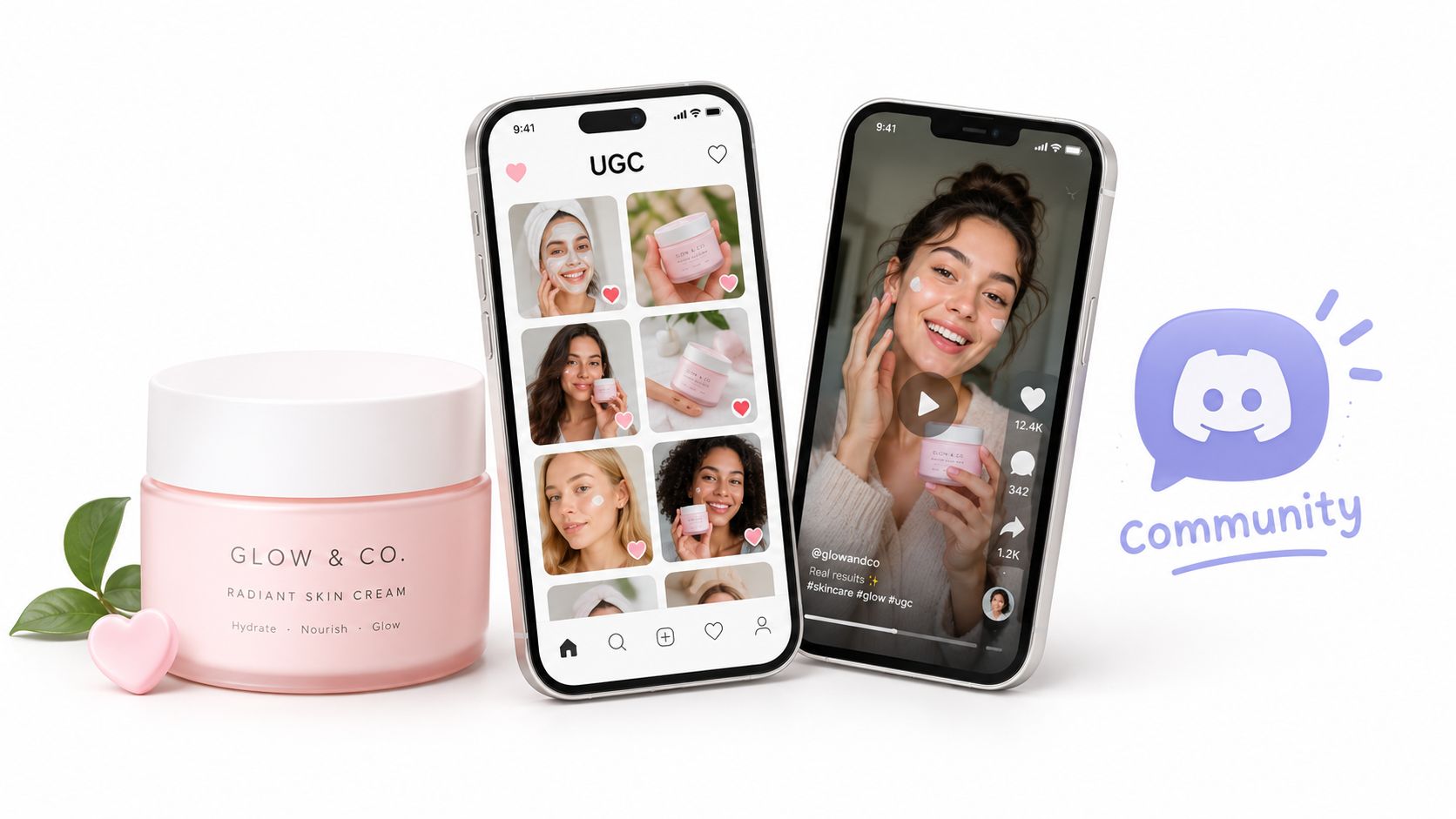
Glossier's model depends on community labor, but not in a careless way. Instagram gives the brand a visual home for customer-made content. TikTok gives it speed and trend response. Discord gives it a space for deeper participation, feedback, and early signals that won't surface in public feeds.
That combination works because each channel asks a different thing from the customer. Instagram says, "show us." TikTok says, "join the moment." Discord says, "help shape what comes next."
Where the model gets hard
Community-led campaigns create a moderation problem before they create a scale advantage. Teams need rules for creator recognition, submission quality, consent, escalation, and response time. Without that structure, "authenticity" turns into backlog.
A better operating model separates machine-helpful tasks from human judgment. Trend detection, draft replies, asset tagging, and scheduling are automatable. Moderation calls, creator sensitivity, and community disputes are not. That's why social media community management needs both workflow and restraint.
Useful KPIs here are contribution-based. UGC volume, contributor recurrence, response speed, sentiment trends, and approval-to-publish cycle time all matter. Pure reach doesn't tell you whether the community is getting stronger or louder.
5. Slack's B2B Product Launch Across LinkedIn, YouTube, and Email Nurture
Slack's launch structure is strongest when viewed by audience role. LinkedIn is often the executive framing layer. It sets the business case and expected value. YouTube is the demonstration layer. It shows the workflow in motion. Email is the adoption layer. It helps existing users and interested prospects move from awareness to usage.
That distinction matters because product launches usually fail in the handoff. The market hears one promise in social, sees another in the demo, and receives a third in email. Multi channel marketing examples often skip that inconsistency problem.
Role-based sequencing
A strong launch has one benefit hierarchy and several message variants. Executives need outcome framing. Practitioners need proof. Existing customers need activation guidance. If those are mixed together, the launch becomes noisy and underperforms even when the product story is good.
A disciplined sequence helps. Publish the announcement where professional context is strongest, follow with the demonstration, then deliver segmented email by account state or product familiarity. Video is often the bridge between the abstract promise and the practical step. For teams refining that middle step, a guide on posting video on LinkedIn is useful because launch assets often need lighter edits and tighter framing than social-first clips.
The right KPIs follow the roles. Reach and qualified engagement for the announcement. Demo consumption for the YouTube layer. Activation and feature adoption for email-led follow-up. If a team only watches top-line launch attention, it won't see whether the launch changed behavior.
6. Airbnb's Destination Marketing Across Instagram, Pinterest, and Email Segments
Airbnb is a useful travel example because intent changes across channels. Instagram carries aspiration. Pinterest carries planning. Email carries decision support. That means the campaign should shift from emotional imagination to practical curation to timely reminder.
Too many travel brands flatten those jobs into one visual loop. Nice photos everywhere. Weak sequencing everywhere.
Seasonal sequencing that actually fits behavior
Destination marketing gets better when the asset library is organized by travel season, traveler type, and planning horizon. Instagram can test which places trigger emotion. Pinterest can identify which locations people save for later. Email can then speak to a narrower segment based on observed interest or browse behavior.
This is one place where save behavior matters more than vanity engagement. Someone who saves an itinerary board or destination image is declaring planning intent. That signal can justify more destination-specific creative later, even if the original social post didn't drive immediate booking.
For execution, timing is the hidden lever. Seasonal travel content usually needs earlier lead time than teams expect. If you're tuning that top-of-funnel rhythm, best times to post on Instagram can help shape release windows, but the bigger issue is sequencing creative around when people plan, not when your internal calendar says the quarter starts.
7. Dollar Shave Club's Growth Through TikTok, YouTube, and Reddit Community Building
Dollar Shave Club works as a voice-led system. TikTok handles cultural reach and speed. YouTube handles durable storytelling and product context. Reddit handles dialogue, objections, and product feedback. Those jobs overlap, but they shouldn't collapse into one another.
That last part matters. Brands often treat Reddit like another distribution outlet. It usually punishes that behavior.
Broadcast tone fails here
The operational challenge is founder or brand voice consistency without sounding overproduced. TikTok can absorb roughness. YouTube can support a more complete narrative. Reddit requires actual participation. The same script won't survive all three.
A better model starts with a founder or product brief, then routes it into channel-specific drafts and response plans. TikTok asks for hooks and reaction speed. YouTube asks for structure. Reddit asks for context, humility, and follow-through on product questions. That makes community judgment the bottleneck, not content generation.
Good measurement separates attention from relationship quality. Views and shares matter, but so do repeat commenters, product-feedback themes, and whether public discussion improves future creative or product messaging.
8. Lululemon's Influencer Network Across Instagram, TikTok, and YouTube
Lululemon's ambassador-style model works best as portfolio management. Different creators do different jobs. Some produce broad reach. Others carry trust inside a niche fitness community. Others supply frequency and local texture that a national brand page can't reproduce.
This is why influencer programs break when every creator gets the same brief and KPI. Uniform inputs ignore the actual reason the brand hired distinct creators in the first place.
Portfolio logic over creator count
The practical question isn't "how many influencers?" It's "which role does each creator play?" A yoga instructor, climbing coach, and running creator may all support the same campaign narrative, but their audience expectations differ. Their content formats should differ too.
For teams running several creator tracks at once, the hard part is not finding creators. It's handling briefs, approvals, posting windows, discount or UTM governance, and quarterly reviews without letting the program become spreadsheet-heavy. That's where agency workflows for social execution are relevant, especially when multiple clients or product lines share the same operations team.
The clean KPI model is tiered. Reach for broad creators. Saves and comments for trust-led creators. Clicks, code use, or downstream conversions for commerce-led creators. Then review creator retention and briefing efficiency at the program level.
9. Microsoft's Enterprise Product Awareness Across LinkedIn, YouTube, and Industry Events
Microsoft is a good enterprise example because long buying cycles force discipline. LinkedIn can establish executive relevance. YouTube can hold technical depth. Event-triggered email can continue the conversation after webinars, field events, or solution briefings. No single touchpoint is expected to close the deal.
That makes this one of the best multi channel marketing examples for analysts who need to report influence rather than instant conversion.
Long-cycle demand needs slower architecture
Enterprise campaigns usually need role-based variants from the start. A CIO, IT director, and developer won't read the same proof in the same order. The planning window is longer, approvals are slower, and technical accuracy often matters more than speed.
The measurement model also changes. Qualified engagement, resource downloads, webinar attendance, account penetration, and opportunity creation usually matter more than headline reach. Attribution remains imperfect because event participation, direct traffic, sales conversations, and partner influence all blur the record.
When a team starts asking whether it has the capacity to execute that complexity consistently, a page like Crowbert pricing becomes relevant because the core issue is usually production and reporting throughput, not a lack of channels.
10. Fitness Brand LSKD's Community Cohesion Through Instagram, TikTok, and Email
LSKD is useful because it shows the difference between campaign performance and community health. Instagram shapes identity and belonging. TikTok expands discovery and participation. Email rewards loyalty and creates a direct line for exclusive drops, challenges, or member recognition.
That mix isn't just promotional. It's social architecture.
Community metrics aren't the same as launch metrics
Weekly challenges, member spotlights, polls, and response threads can create stronger repeat participation even when a single post doesn't look exceptional by reach standards. Teams that only measure direct-response outcomes miss whether the audience is becoming more attached, more vocal, and more likely to refer others.
The operating system here is usually cyclical. Recurring prompts create submissions. Submissions create spotlights. Spotlights create more submissions. Email closes the loop by rewarding participation and pulling the most committed members into the next action. If you want a clean way to monitor one piece of that system, an engagement rate calculator is useful, but it should sit alongside sentiment, repeat participation, and referral behavior.
The transferable lesson is restraint. Community programs scale when recurring formats are clear, moderation stays human, and the team knows which interactions deserve a public response versus a private one.
10 Multi-Channel Marketing Examples Comparison
| Campaign | Primary channels & approach | Implementation complexity | Resource requirements | Expected outcomes (KPIs) | Ideal use cases & key advantages |
|---|---|---|---|---|---|
| Coca‑Cola, Integrated Holiday Campaign | Instagram, TikTok, YouTube, Facebook, in‑store; synchronized hashtag + UGC + influencer amplification | High, cross‑team coordination, synchronized windows, approval bottlenecks | High, creative production, influencer ops, asset management, moderation | Impressions, engagement, UGC volume, hashtag participation, channel conversion (2.3B impressions / 30% higher engagement, claim; verify) | Large‑scale brand awareness; unified experience and organic influencer reach |
| Nike, Athlete‑Centric Distribution | Instagram Reels, TikTok shorts, YouTube long‑form; single source footage repurposed per platform | Medium‑High, heavy post‑production & localization | Medium, shoot crew, editors, localization, analytics | Views, watch time, engagement rate, follower growth, cross‑platform discovery (15M monthly views, claim; verify) | Story-driven content that maximizes ROI on shoots; builds athlete authenticity |
| HubSpot, Educational Content Funnel | LinkedIn (awareness), YouTube (learning), Email (nurture); repurpose research into multi‑format funnel | Medium, pipeline mapping, CTA/UTM discipline, attribution work | Medium, content production, email/CRM ops, analytics | Qualified leads, conversions, watch time, engagement, topic attribution (40k leads / 60% conversion, claim; verify) | Demand generation and lead qualification; efficient reuse of research across touchpoints |
| Glossier, Community‑Driven Campaigns | Instagram & TikTok UGC, Discord governance; creator rewards and community voting | Medium, moderation, trend responsiveness, governance | Medium, community managers, moderation tooling, creator rewards | UGC volume, contributor participation, engagement, sentiment (3x engagement / 50M views / 40% production reduction, claims; verify) | Community engagement and product co‑creation; lowers in‑house production and increases loyalty |
| Slack, B2B Product Launch | LinkedIn (execs), YouTube demos, Email adoption sequences; role‑based messaging & timed launch | High, role segmentation, tight launch timing, multi‑stakeholder approvals | High, content, customer success alignment, segmentation, analytics | Reach, demo engagement, adoption, feature usage, conversion, time‑to‑adoption (2.1M views / adoption & conversion lifts, claims; verify) | Product launches targeting mixed audiences; accelerates adoption with role‑specific assets |
| Airbnb, Destination Marketing | Instagram (aspiration), Pinterest (planning), Email (conversion); seasonal asset libraries & behavioral segmentation | Medium, asset management, seasonal planning, rescheduling | Medium, photography, asset DB, email segmentation, analytics | Instagram reach/engagement, Pinterest saves/clicks, email opens/clicks, bookings/velocity (claims on saves/bookings/lifts, verify) | Travel intent funnel; strong visual library drives planning → booking conversion |
| Dollar Shave Club, Voice‑led Community Growth | TikTok cultural reach, YouTube storytelling, Reddit feedback; founder‑led authenticity + product feedback loop | Medium, founder availability, moderation, trend timing | Low‑Medium, founder time, community moderation, modest production | Views, discussion quality, feature requests, repeat purchase, attributed revenue (45M views / earned‑media claim, verify) | Authentic founder voice, community product validation, earned media amplification |
| Lululemon, Influencer Network | Instagram, TikTok, YouTube; tiered ambassador program (macro/micro/nano) with UTMs and codes | High, managing many creators, approval windows, attribution complexity | High, influencer ops, tracking, briefs, creative oversight | Reach, engagement, saves, clicks, code use, conversion, CPA, creator retention (impressions/engagement/conversion claims, verify) | Community & niche targeting via ambassadors; high engagement and measurable conversions |
| Microsoft, Enterprise Awareness | LinkedIn (executive), YouTube (technical), industry events & email; long‑cycle B2B demand gen | High, 90‑day planning, long production cycles, complex attribution | High, technical content, events, CRM/ABM integration, analytics | Qualified engagement, resource downloads, webinar attendance, pipeline influence, sales‑cycle impact (pipeline/reduction claims, verify) | Enterprise demand gen and credibility building; reduces presales burden with technical content |
| LSKD, Community Cohesion | Instagram aspirational, TikTok discovery/participation, Email loyalty; weekly challenges & member spotlights | Medium, recurring community programs, moderation, scheduling | Medium, community managers, UGC moderation, email ops, analytics | Community health: comments, shares, UGC submissions, referrals, LTV, repeat purchase (LTV/list‑growth claims, verify) | Community retention and referral growth; reduces production costs and boosts lifetime value |
Turn the Pattern Into an Operating System
The strongest multi channel marketing examples all follow the same discipline. They start with one campaign narrative, then assign each channel a distinct job. They don't ask every platform to carry the same message in the same format to the same audience state.
That matters because multi-channel behavior is now normal, not exceptional. A 2026 multichannel market roundup reported the global multichannel marketing market at 181.77 billion in 2024, rising to 192.91 billion in 2025 and projected to reach $349.74 billion by 2035 at a 6.13% CAGR in this market summary. Growth in spend doesn't mean every brand should add more channels. It means coordination has become an operational requirement.
The practical sequence is straightforward.
- Define one narrative: Write the central campaign claim once. Then state what changes by platform and what must remain fixed.
- Assign channel jobs: Choose where discovery, education, proof, conversion, and retention happen.
- Build an asset matrix: Decide which source assets can branch into which formats without becoming repetitive.
- Set realistic cadence: Consistency matters. A 2026 study found a positive relationship between creators' posting consistency and follower engagement in this journal article.
- Pick one primary KPI per stage: Support it with secondary signals, but don't let every dashboard metric compete for attention.
- Document attribution limits: Cross-channel reporting is still the weak point for many teams.
That last issue is more serious than most example roundups admit. Independent 2026 coverage says 82% of marketers cite inconsistent data across channels as their top obstacle to effective omnichannel integration, reported in this omnichannel measurement roundup. So the hard part often isn't finding channels. It's proving what happened across them.
A measured KPI stack helps:
An autonomous workflow should match that structure. Brief. Creative. Schedule. Analytics. Then repeat. With an option like Crowbert's feature set, teams can run that loop with brand-memory safeguards, channel-aware formatting, smart rescheduling, isolated client context, analytics snapshots, and explicit human approval before anything publishes. That's useful when the bottleneck is handoff friction between strategy, production, scheduling, and reporting.
For more on measurement design, pair this with an omnichannel marketing analytics guide.
Frequently Asked Questions
How many channels should you start with
Start with the fewest channels that cover distinct buyer states. That means a discovery channel, a depth channel, and a conversion channel. If two channels do the same job, one is probably redundant.
How do you measure cross-channel performance
Use one primary KPI per stage, apply consistent naming and UTM discipline, and document where attribution breaks down. Cross-channel measurement is often limited by fragmented data, so look at assisted influence as well as direct conversion.
Should content be identical across networks
No. The campaign idea should stay consistent, but the execution should change by platform behavior. The best multi channel marketing examples reuse the story, not the exact post.
How does human approval work in an autonomous workflow
The agent can prepare drafts, format assets for each channel, build the schedule, and assemble reporting. A human team still reviews and approves before publishing, which keeps brand and compliance control where it belongs.
Crowbert gives teams an autonomous AI agent that can turn one campaign brief into channel-ready drafts, approval workflows, scheduled posts, and performance reporting across major social platforms. If you want a tighter operating system for multi-channel execution without giving up human control, visit Crowbert.
About the Author
The team behind Crowbert building AI-powered marketing tools that help businesses of all sizes create professional campaigns, manage social presence, and drive real results.


