10 TikTok Best Practices That Drive Better Results
Apply tiktok best practices for stronger hooks, creative specs, captions, discovery, scheduling, repurposing, and scalable short-video production.
TikTok performance starts before you publish. The platform reached 1.59 billion monthly active users globally in early 2025 and was projected to reach 1.9 billion by 2029, while users spent about 34 hours per month, or roughly 95 minutes per day, in the app, according to TikTok audience and usage benchmarks. That scale changes the job. A strong result rarely comes from one lucky post. It comes from an operating loop that improves the opening seconds, produces to platform specifications, packages content for search and discovery, publishes consistently, responds to viewers, and turns performance data into the next creative decision.
The practical workflow is straightforward: choose a content pillar, write several first-three-second hooks, produce a vertical asset with a clear payoff, add searchable context, schedule the approved post, monitor the early conversation, and repurpose the winners. Crowbert supports that loop as an autonomous AI agent, not as a monitoring-only dashboard. It can create, adapt, schedule, publish, manage engagement, and analyze social work end to end, while nothing ships without explicit human approval.
Table of Contents
1. Post Consistently Within Peak Engagement Windows
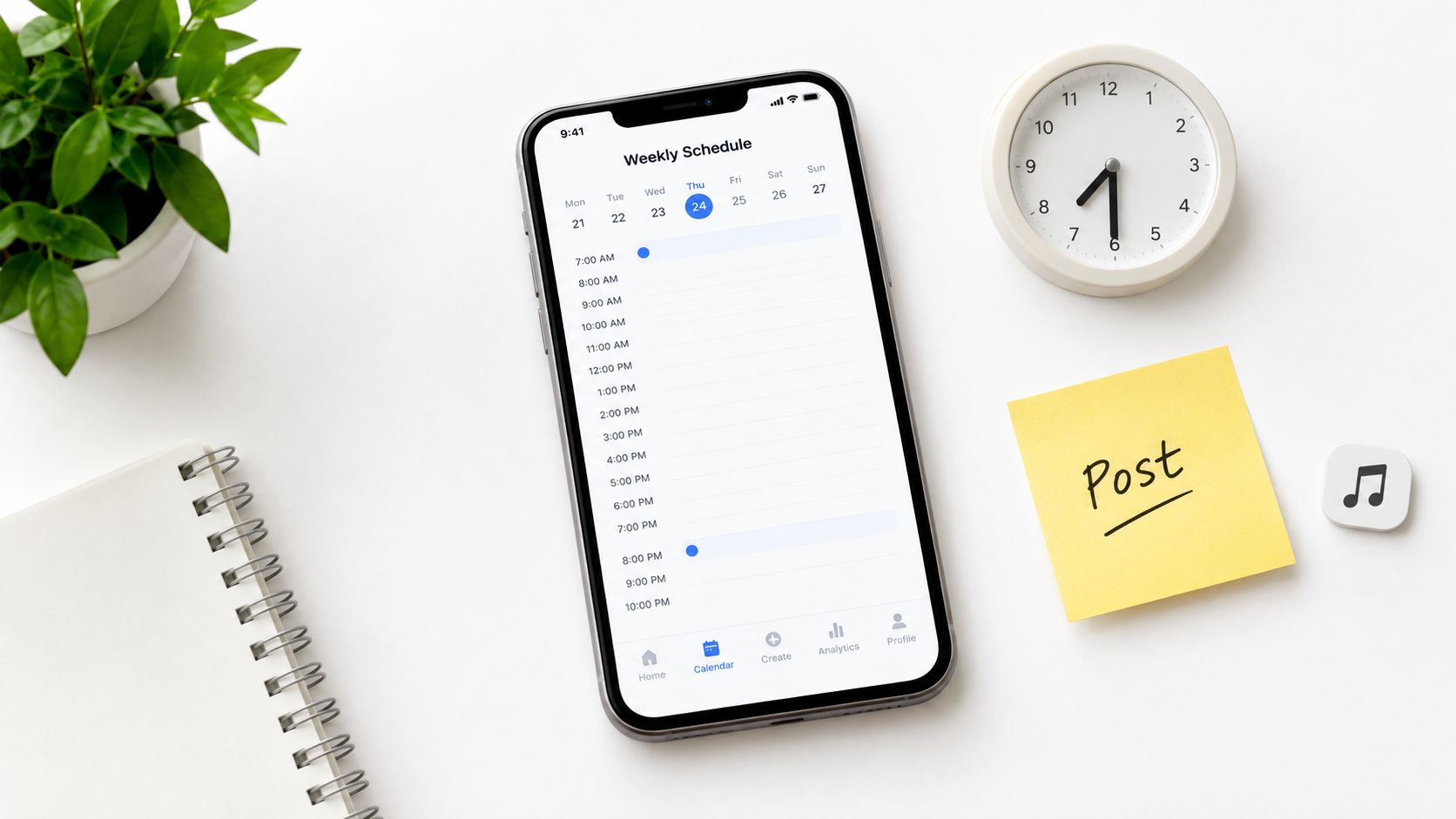
Consistency works when it supports learning, not when it forces a quota. Set a cadence your team can sustain, then schedule posts around active periods in your own TikTok Analytics. Audience location changes the answer, so global accounts should test priority markets separately rather than apply one timezone to every viewer, as market-specific TikTok benchmarks indicate.
Use a Viral.new posting cadence guide to frame the schedule, then validate it with account-level results. A travel creator might test a morning commute window for trip-planning content, while a business software account could compare workday and evening behavior. Treat both as hypotheses. Keep a window only when first-hour views, watch time, and qualified comments support it.
Build a cadence you can defend
Create a repeatable weekly schedule with room for one controlled timing test. Schedule early enough to protect production time, but require human review before automation publishes any draft.
- Segment by market: Compare priority markets independently when location affects revenue.
- Test one timing variable: Keep topic and format similar while changing only the publishing window.
- Review first-hour signals: Weigh watch time and meaningful interactions alongside views.
- Use a channel-aware scheduler: Crowbert can maintain a cross-channel calendar while preserving human approval.
For timing experiments, pair native analytics with Crowbert's TikTok posting-time guide. The useful result is not a universal “best time.” It is a documented set of windows for each priority audience, applied consistently enough to compare creative decisions and feed the next production cycle.
2. Use Trending Sounds and Music With Strategic Timing
A trending sound earns attention only when it strengthens the idea your audience already expects from you. A recipe account can place rising audio beneath a quick demonstration. A software brand might adapt a recognizable format to workplace frustration, while forcing a dance trend into a product explanation can attract views without attracting the right intent.
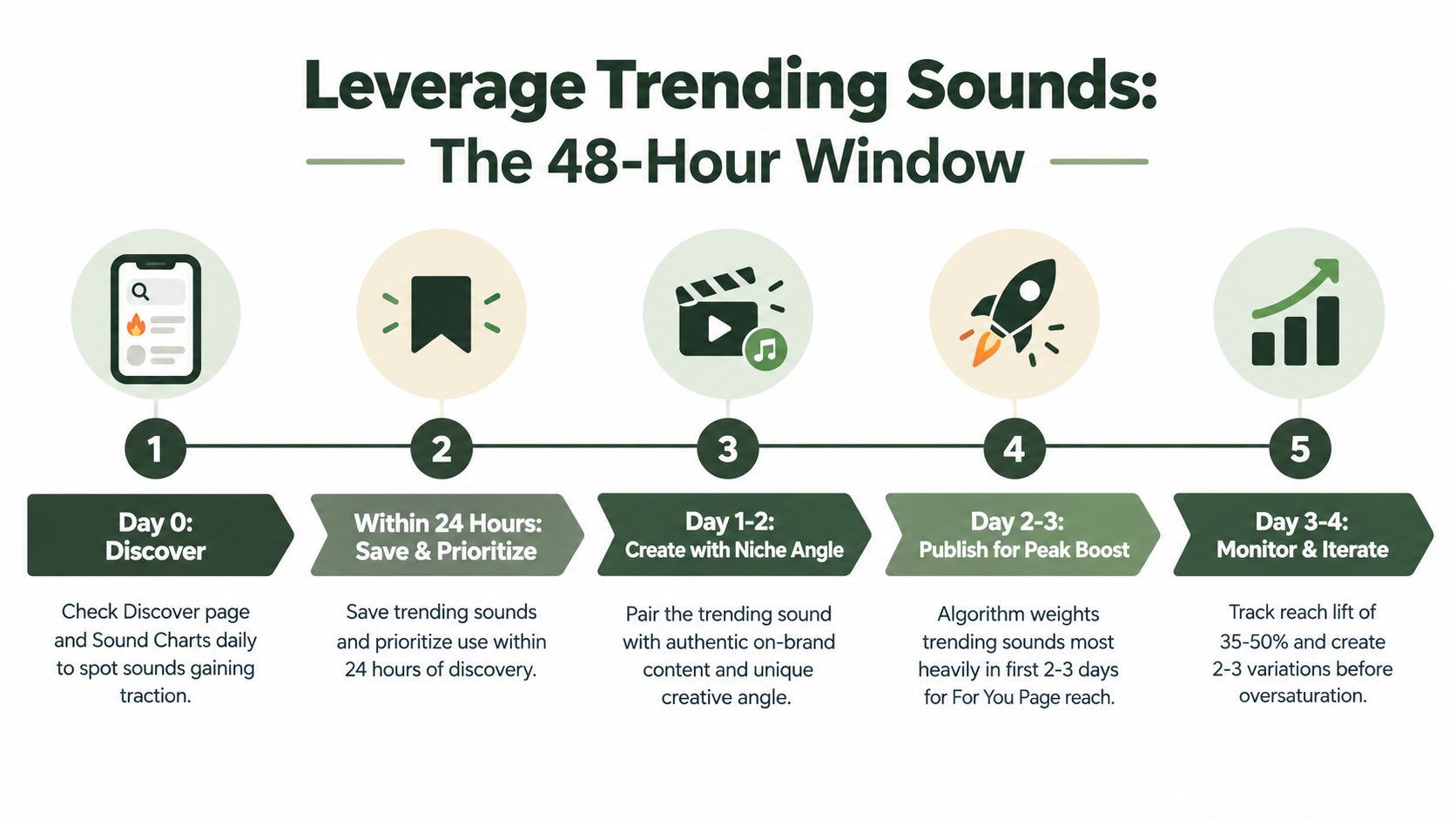
Scan TikTok's sound discovery surfaces and save candidates that fit your content pillars. Note when you first find each sound, then decide whether your team can produce a useful variation while the format still feels fresh. Trend velocity varies by audience, region, and category, so fixed assumptions about how long a trend lasts are unreliable.
The production decision should answer one question: what does this sound help the viewer understand, feel, or do?
Create several concepts around one audio only when each delivers a different benefit. One can answer a beginner question, another can show a product use case, and a third can invite a comparison in the comments. That creates a learning loop without filling the feed with near-identical videos.
- Match the audience problem: Use the sound to frame a recognizable situation, then provide the explanation.
- Protect brand fit: Skip trends that conflict with your values or make the product harder to understand.
- Check saturation: When many accounts in your category use the same treatment, add a sharper niche angle.
- Document the decision: Record the sound, concept, market, and intended audience so performance data can explain the result.
A simple workflow keeps speed from weakening judgment. Save promising audio, draft a concept tied to a content pillar, confirm that the format suits the audience, and review the cut before publishing. Trend Content Agent can help identify and adapt trend-led concepts within that workflow. Human approval remains necessary. A person should confirm the audio, wording, rights context, and brand interpretation before any draft goes live.
3. Create Short, Hook-Driven Content With a Clear Payoff
Short videos succeed when the opening promise is clear and the payoff arrives without detours. Show the result, name the problem, challenge a common assumption, or demonstrate the consequence of a mistake. The viewer should understand the topic from the first frame and spoken line, without decoding the setup.
TikTok benchmark guidance reports that viewers watch about 55% of a video to the end, making retention a more useful creative question than reach alone, according to TikTok engagement data. Write the hook as a standalone sentence before filming. Then identify the minimum proof needed to make its promise credible. LesFM's tips for TikTok offers additional guidance on shaping attention-grabbing openings.
Edit for proof, pace, and payoff
Build the cut around four decisions:
- Opening: Present the problem, result, or question immediately.
- Development: Keep only the evidence or steps that support the promise.
- Payoff: Deliver the answer, reveal, demonstration, or next action plainly.
- Review: Remove pauses, repeated context, and transitions that do not advance the idea.
A video can be brief and still feel incomplete if the proof is missing. Conversely, extra explanation can reduce retention when the viewer already understands the point. Choose the shortest length that delivers the promised value.
TikTok's advertising guidance allows in-feed videos from 5 to 60 seconds and recommends 21 to 34 seconds for most ads in its SMB advertising tips. That guidance applies to ads, not every organic post, so use it as a production reference rather than a fixed rule. For help shaping short-form concepts, see Crowbert's guide to creating short videos.
4. Use On-Brand Captions and Text Overlays Strategically
Captions and overlays should make the same idea easier to find, understand, and remember. Give each element a defined job: spoken words explain the point, on-screen text states the hook or labels what viewers see, and the written caption supplies searchable context or a clear profile prompt.
Keep the frame readable. A caption that repeats every spoken line adds little, while a concise description can clarify the exact question the video answers. Use the terms your audience would naturally search, especially for product, local-service, and how-to content. Brand voice still matters, so review wording for consistency before publishing.
TikTok search needs a repeatable check, not a pile of keywords. Coverage reports that 49% of U.S. consumers have searched via TikTok, up from 41% in 2024. The same reporting says 23% of TikTok sessions include a search interaction and 47% of search results surface content less than 7 days old, according to reporting on TikTok search behavior. Treat those figures as directional evidence. Useful answers and current information still matter more than stuffing phrases into the post.
Package one search intent
Start with one plain-language phrase in the spoken opening. Repeat it in readable overlay text, then write a caption that describes the specific answer rather than summarizing the brand. After publishing, check search traffic and qualified profile visits alongside retention. Search packaging belongs in the performance loop, because discovery data should shape the next hook and caption.
- Name the subject: State the product, problem, location, or task.
- Answer one question: Keep unrelated intents in separate videos.
- Write naturally: Use language a person would type or say.
- Check freshness: Revise advice when the underlying answer changes.
Use Crowbert's TikTok caption-writing guide during drafting. Before approval, have a person verify terminology, claims, accessibility, and overlay placement. Human review keeps automation useful without letting templated text weaken the brand.
5. Engage Authentically in Comments Within the First Hour
Comments posted soon after publication are working inputs, not a box to tick. Review questions, objections, corrections, and requests for examples first. They can expose a customer need, clarify the video, and supply the next hook in your content loop.
Reply with information. Add a relevant detail, ask one focused follow-up, or direct viewers to the exact demonstration point. Pin a comment that frames the discussion clearly. Avoid repetitive prompts that make the thread feel managed rather than useful.
Build a response queue
During the first review period, place each comment in a simple queue. Label it as a question, objection, testimonial, feature request, or support issue. This gives replies a clear purpose and makes recurring themes easier to carry into production.
- Answer publicly: Resolve common problems that other viewers may share.
- Escalate privately: Move account, payment, or personal-data issues away from the public thread.
- Record recurring questions: Add strong questions to the hook library for future videos.
- Use video replies selectively: Create a new post when the answer has value on its own.
Set a review cadence, then check whether replies lead to continued discussion, profile visits, or useful follow-up questions. Speed helps only when the response is accurate and on brand.
Crowbert includes engagement notifications and a quick-reply workflow. Its comment-response guidance can help establish a consistent voice. The agent may prepare response options, but a person should approve replies involving complaints, safety, regulated claims, or sensitive customer information. Human approval keeps automation useful while preserving judgment.
6. Repurpose High-Performing Content Across Multiple Formats
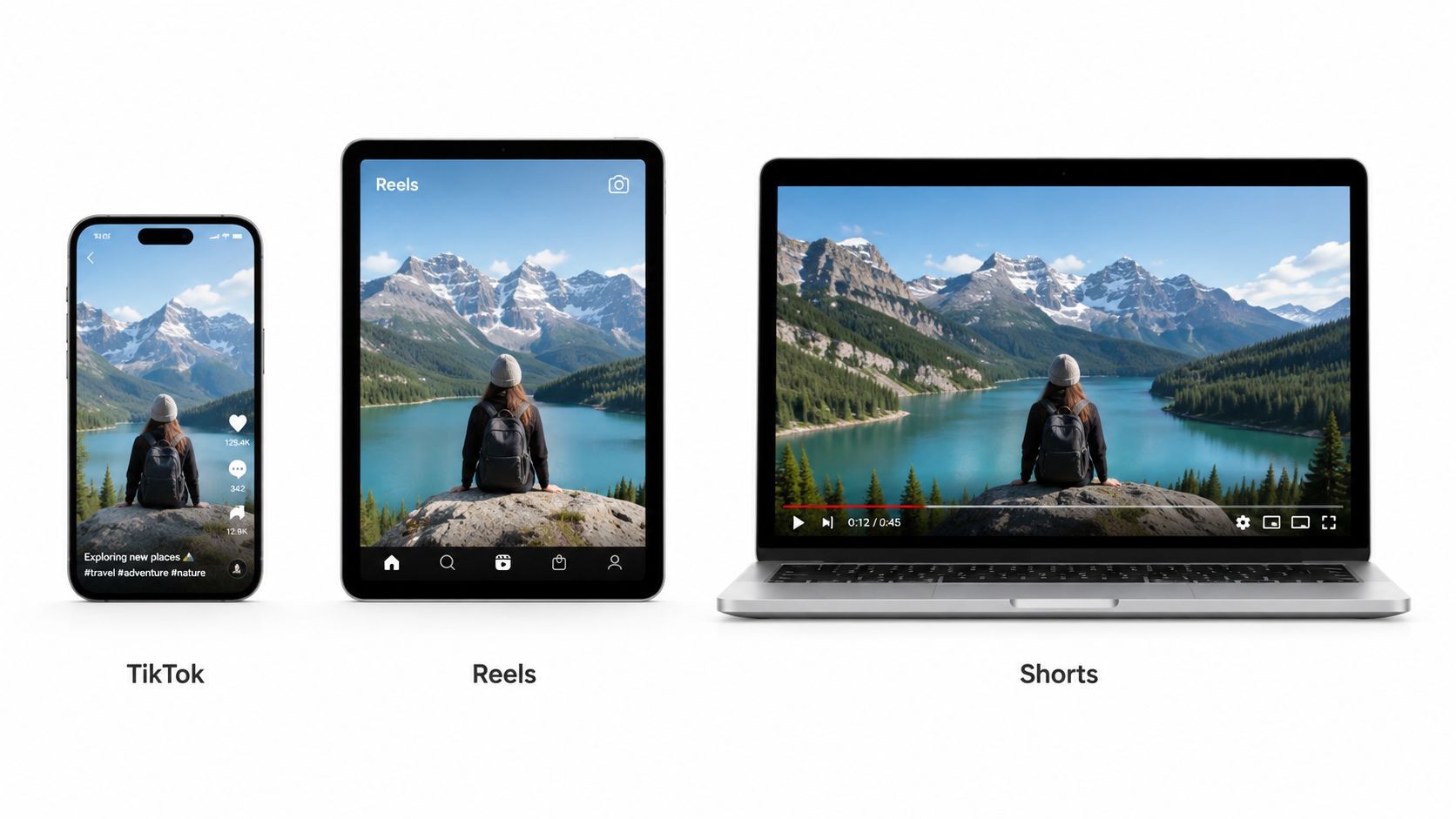
A TikTok post can become a small content system. Preserve the core idea, then change the format, opening, proof, and call to action for each destination. A demonstration might become a short clip, viewer questions can shape a follow-up series, and the central lesson can support a longer explanation elsewhere.
Start with the post, not the file. Remove platform-specific watermarks where appropriate, rewrite the caption for the destination audience, adjust the opening context, and confirm that the audio is permitted on each network. A professional audience may need the business implication first. A discovery-led audience may respond faster to the visible result.
Build an adaptation brief from the winner
When a post earns strong watch time, meaningful shares, saves, or qualified profile visits, flag it for adaptation. Record the creative pattern before editing: the first-three-second hook, visual proof, audience question, main lesson, and call to action. This keeps the operating loop focused on what worked, rather than treating one successful file as a template for every channel.
Choose the version that fits the audience:
- Short-form adaptation: Recut the strongest moment for another vertical-video channel.
- Professional adaptation: Rewrite the opening around the business problem for LinkedIn.
- Static adaptation: Turn a sequence of steps into a carousel or quote graphic.
- Editorial adaptation: Expand the explanation into a help article or newsletter section.
Crowbert's channel-aware formatting can prepare different captions, media treatments, and publishing schedules from one approved content brief. That reduces manual handoffs while keeping human review in the loop. Inspect every destination version before publishing, since adaptation requires judgment about context, rights, and audience intent.
7. Analyze Performance Data to Identify Content Patterns and Iterate
Views confirm distribution, but they cannot show whether a video held attention, reached the intended audience, or created business value. Build a dashboard that separates creative and commercial signals: watch time and completion rate indicate retention, comments and shares indicate interaction quality, traffic source shows discovery, and profile visits or site activity connect attention to action.
Track engagement rate, comment-to-view ratio, shares, saves, and watch time, then compare results with relevant industry and competitor benchmarks. For additional guidance on meaningful performance metrics for creators, use measures that match the decision you need to make. The engagement-rate formula described in TikTok engagement benchmark guidance is (likes + comments + shares) ÷ views × 100. Keep one formula across reporting periods, or a measurement change may look like creative improvement.
A useful review starts with a simple evidence log. Record the topic, first-three-second hook, format, audience market, publishing window, retention, interaction quality, traffic source, and resulting business action. Compare a meaningful group of posts, not one unusually strong or weak result.
Ask five questions:
- What held attention: Did the opening make a clear promise, and did the payoff arrive?
- What earned response: Did viewers ask useful questions, share, or save the post?
- Who arrived: Did discovery reach the intended demographic and market?
- What converted: Did the post produce profile visits, qualified inquiries, or site activity?
- What changes next: Which single variable will be tested while the rest stays stable?
Crowbert's engagement rate calculator can help normalize results, while workspace analytics can organize recurring snapshots. An analyst agent may surface patterns, but the marketing owner approves the interpretation and chooses what receives more production. This keeps the loop disciplined: improve the hook, package the next version to platform specifications, publish, inspect results, and scale only the workflows that remain under human review.
8. Build Community Through Consistent Values and Brand Personality
TikTok community grows from a recognizable point of view, not a posting schedule alone. Values show up in the trends you skip, the claims you make, the customers you feature, the caption language you choose, and your response when viewers challenge a post.
Set a few editorial principles before increasing output. A fitness account can favor sustainable habits over extreme promises. An education brand can prioritize practical application over theory. A software company can explain limitations consistently instead of presenting every feature as a universal solution.
Turn personality into daily decisions
Values become useful when they shape production, review, and community management. Convert them into a short approval filter that creators, editors, and AI agents can apply before publication.
- Voice: Choose whether the account sounds direct, curious, playful, analytical, or calm.
- Proof standard: State when a claim needs a citation, demonstration, customer evidence, or qualification.
- Trend filter: Identify cultural formats that fit the brand and those likely to confuse viewers.
- Community behavior: Set the response process for criticism, corrections, and support requests.
- Visual cues: Repeat selected choices in framing, text treatment, color, and editing pace.
Apply the filter across the operating loop. Review the first three seconds for a voice and promise that fit the brand, then check specifications, discovery packaging, and comment responses before publishing. Afterward, use performance patterns to refine the workflow without changing the account's identity.
Consistency does not require repeating one script. It gives viewers a stable reason to trust the account as formats change. Crowbert's dedicated agent can learn brand guidelines and prior work inside an isolated client workspace. Human approval still controls the final expression, which helps teams maintain one coherent personality when several contributors produce content.
9. Test Format Variety to Prevent Audience Fatigue and Staleness
A dependable TikTok account needs a stable message and changing delivery. Repeating one visual pattern can make strong topics feel predictable, while random experimentation makes performance difficult to interpret. Format testing keeps the operating loop adaptable without abandoning the account's point of view.
Start with a topic that has already earned attention. Hold the subject and intended viewer steady, then change one delivery choice: a talking-head explanation, screen recording, question reply, product demonstration, or text-led sequence. The first three seconds, opening visual, and payoff still need to match the format. Produce each version to TikTok's specifications, package it for discovery, and publish within the normal cadence.
Keep a simple format log rather than forcing every result into a fixed template. Record the format, topic, hook, length, opening visual, completion behavior, watch time, and comment quality. Add green-screen explanations, behind-the-scenes clips, customer demonstrations, duets, stitches, and text-led edits when they suit the brand.
- Protect the core: Continue the format that communicates the strongest content pillar reliably.
- Test one variable: Change delivery while keeping audience intent and subject consistent.
- Use viewer questions: Comments provide practical prompts with clear relevance.
- Repeat useful winners: Produce another version before moving to a new experiment.
Review results for patterns, then update the next brief, hook, or template. Human approval should decide whether automation can scale a proven variation, especially when tone or claims require judgment.
Variety increases production cost through extra templates, review rules, and editing choices. Small teams should standardize a few formats they can sustain, adding experiments only when the workflow can support them without weakening consistent publishing.
10. Collaborate With Creators and Use Duets and Stitches for Reach
Duets and stitches perform best when they contribute something useful to an existing conversation. A duet places your response beside the original video. A stitch uses a selected segment as context for your reply. Either format needs a clear reason for your perspective to appear.
Select creators based on audience fit, topic relevance, and the quality of the conversation they generate. A specialist answering a common beginner question may attract more qualified attention than a large entertainment account with little connection to your offer. Confirm permission and usage expectations before a response becomes a campaign asset.
Add value without hijacking the conversation
Useful collaborations correct a misconception, demonstrate a safer method, add professional context, or finish an incomplete explanation. Repeating the source gives viewers little reason to watch, comment, or follow.
Use this workflow:
- Choose a relevant source: Match the creator's topic and audience to the viewer you want to reach.
- State your angle early: Explain whether you are adding context, testing a claim, or showing an alternative.
- Credit clearly: Keep native attribution visible so the original creator receives recognition.
- Invite both communities: Answer relevant comments and acknowledge feedback that improves the discussion.
- Check commercial context: Confirm disclosures, permissions, and brand-safety requirements before approval.
Treat each collaboration as part of the operating loop. The opening still needs to earn attention within the first three seconds, the video must meet platform specifications, and the caption should support discovery. Track retention, comment quality, and follow-up interest, then use the strongest angle in the next brief. Human approval should control any automation that expands a successful variation, particularly when tone, permissions, or claims require judgment.
For an agency, creator briefs, drafts, approvals, and reporting can remain in one workspace. Crowbert's agency solution supports that coordination while publishing decisions stay with an authorized human reviewer.
Top 10 TikTok Best Practices Comparison
| Strategy | Implementation complexity | Resource requirements | Expected outcomes | Ideal use cases | Key advantages |
|---|---|---|---|---|---|
| Post Consistently Within Peak Engagement Windows | Low–Medium (scheduling + analytics) | Scheduling tools, content calendar, audience analytics | Steady reach growth; stronger early engagement | Accounts seeking predictable growth; teams batching content | Algorithmic favor for predictable posting; easier planning |
| Leverage Trending Sounds and Music with Strategic Timing | Medium (real-time monitoring + fast production) | Trend tracking tools, rapid editing, creative variations | Short-term visibility spike; higher reach when early (35–50%) | Creators aiming for viral reach; small creators competing with large accounts | Immediate algorithmic boost; lower production barrier |
| Create Short, Hook-Driven Content with Clear Payoff | Medium (scripted hooks + precise editing) | Creative skills, editing tools, hook testing | Higher completion rates and watch time; better distribution | Educational, e‑commerce, and attention-driven content | Improves completion rate; repeatable structure for testing |
| Use On-Brand Captions and Text Overlays Strategically | Low (copywriting + overlay design) | Brand voice guide, caption testing, overlay editor | Increased comments, accessibility, and discoverability | Brands building voice; content consumed without sound | Drives engagement and recognition; aids indexing |
| Engage Authentically in Comments Within the First Hour | Medium (real-time moderation & responses) | Community managers, notification workflows, reply templates | Higher early algorithmic lift; stronger community loyalty | Accounts focused on engagement, conversions, and retention | Boosts engagement velocity; builds trust and feedback loops |
| Repurpose High-Performing Content Across Multiple Formats | Low–Medium (editing + platform adaptation) | Editing tools, platform-specific captions, republishing workflow | Improved ROI; 30–40% better performance on secondary platforms | Small teams maximizing output; omnichannel distribution | Maximizes production ROI; consistent cross‑platform reach |
| Analyze Performance Data to Identify Content Patterns and Iterate | Medium (analytics review + experimentation) | Analytics dashboard, spreadsheets or analyst/AI, review cadence | Predictable growth; clearer content pillars and higher efficiency | Teams scaling strategy; data-driven creators | Removes guesswork; identifies sustainable growth patterns |
| Build Community Through Consistent Values and Brand Personality | Medium (brand definition + consistent execution) | Brand guidelines, editorial oversight, team alignment | Higher follower retention and loyalty (40–60%) | Brands seeking long-term community and LTV | Stronger loyalty; clear differentiation in crowded niches |
| Test Format Variety to Prevent Audience Fatigue and Algorithmic Staleness | Medium (planned experiments + tracking) | Creative time, format tracker, production skills | Higher completion rates; discovery of new high-performing formats | Accounts facing stagnation or creative burnout | Reduces fatigue; signals freshness to the algorithm |
| Collaborate with Creators and Leverage Duets and Stitches for Reach | Low–Medium (outreach + timely responses) | Creator network, notifications, collaboration planning | 2–3x higher engagement; audience cross‑pollination | Niche partnerships; rapid reach expansion | Immediate access to new audiences; reciprocal promotion |
Turn TikTok Best Practices Into a Repeatable System
The most useful TikTok best practices aren't isolated tricks. They form a weekly operating cycle. Start by reviewing the previous period's retention, completion behavior, comment quality, shares, saves, traffic source, audience location, profile activity, and business outcomes. Keep the strongest content pillars, select one controlled test, and write several alternatives for the first three seconds before anyone opens the camera.
Next, produce channel-ready vertical assets. Check the opening frame at phone size, confirm that the text is readable, deliver the payoff without unnecessary setup, and package the post around a clear search intent when the subject is discoverable. TikTok is used by audiences in major markets including the United States, Indonesia, and Brazil, so translate a global plan into market-specific creative and publishing decisions rather than assuming one version will perform identically everywhere.
Then schedule the approved TikTok posts. A calendar should show the content pillar, target audience, hook, format, intended window, approval owner, and repurposing destination. Crowbert can create drafts in Creative Studio, adapt copy and media for each channel, suggest timing, schedule approved content, publish across supported networks, and prepare analytics snapshots. Its autonomous agent coordinates specialized creative, producer, planner, and analyst work, but human-in-the-loop publishing remains explicit.
After publication, monitor the early conversation and respond with substance. Capture recurring questions as future hooks, escalate support or privacy issues through the correct channel, and flag posts that deserve adaptation. Connect TikTok activity with site behavior and conversions on a recurring basis, because a high-reach video isn't automatically a high-value video. For normalized engagement calculations, use the Crowbert engagement rate calculator and keep the formula consistent across reporting periods.
Finally, repurpose the winners. Rewrite their hooks for the destination audience, adjust the visual treatment, verify audio permissions, and schedule each version intentionally. Crowbert supports cross-channel production and approval from its features workspace, while pricing information can help a team evaluate whether consolidating creation, scheduling, engagement, and reporting fits its operating model.
Frequently Asked Questions
Can Crowbert automate TikTok scheduling?
Yes. Crowbert can prepare, schedule, and auto-publish approved TikTok content, including channel-aware captions and timing recommendations. It doesn't publish an unapproved draft, so the team retains control over the final asset, wording, destination, and timing.
Can the Creative Studio produce TikTok-ready content?
Crowbert's Creative Studio supports on-brand image, short-video, and copy generation. The producer workflow can adapt a brief to vertical social formats, after which a human can review the hook, overlays, caption, audio treatment, and brand fit before approval.
What approval controls are available?
Crowbert uses a human approval workflow. Drafts can be reviewed before publishing, and the dedicated agent operates within an isolated client sandbox designed to prevent cross-workspace context leakage. That makes it possible to automate production tasks without giving up editorial or compliance review.
Can one TikTok idea be repurposed across channels?
Yes. Crowbert supports channel-aware formatting across multiple social networks, so an approved TikTok concept can be adapted into different captions, media treatments, and publishing plans. Review each version before release because audience expectations, audio rights, and calls to action vary by channel.
Is Crowbert only a TikTok analytics tool?
No. Crowbert is an end-to-end autonomous AI social media agent. It supports creation, adaptation, scheduling, publishing, engagement workflows, and performance analysis, with human approval required before content goes live.
Crowbert gives teams an autonomous AI agent for TikTok and cross-channel social work, from Creative Studio production and searchable captions to approval-based scheduling, engagement responses, and performance reporting. Visit Crowbert to turn your TikTok best-practice workflow into a repeatable system without removing human control.
About the Author
The team behind Crowbert building AI-powered marketing tools that help businesses of all sizes create professional campaigns, manage social presence, and drive real results.