What Does OOTD Stand for and How to Use It Right
What does OOTD stand for? Learn it means Outfit of the Day, where it started, how to use it and hashtag tips with examples.
OOTD stands for “Outfit of the Day.” It works as both a caption and a discovery hashtag for outfit-focused posts on Instagram, TikTok, Pinterest, and YouTube.
You may notice it while scrolling past a mirror photo, a quick getting-dressed video, or a styling clip that turns one pair of trousers into several looks. If you've wondered whether OOTD describes the clothes, the post format, or the entire trend, the short answer is that it can do all three, depending on context. The term began as simple social shorthand, but it now labels a wider fashion-content workflow that includes photos, short-form video, and AI-assisted styling.
Table of Contents
Introduction to What OOTD Means Today
A creator might write “Monday OOTD” beneath a workwear photo, add #OOTD to a transition video, or use the phrase in a post showing what they wore to dinner. In each case, the outfit is the main subject. The surrounding story, location, accessories, and styling advice add context, but the clothing remains the reason someone stops scrolling.
That explains why the abbreviation keeps appearing even when the content looks different. A still image, a try-on sequence, and a before-and-after styling clip can all qualify as OOTD content if they document or present a look. The label gives viewers a quick signal about what they're about to see.
The phrase also helps creators organize a recurring series. “OOTD” can become a dependable content theme for a personal wardrobe, a boutique, a stylist, or a fashion brand. A creator may use it for everyday outfits, while a retailer may pair it with product details and a path to purchase. The underlying idea stays simple: show the look, explain the choices, and make the post easy to recognize.
For teams planning several recurring formats, a clear content system matters more than a single caption. Crowbert's explanation of what content pillars are can help place OOTD alongside related themes such as styling education, product demonstrations, and customer looks.
What OOTD Stands For and How It Works as a Label
A viewer scrolling through a fashion feed may see “Today's OOTD” above a photo, styling clip, or virtual outfit concept. OOTD means “Outfit of the Day.” The abbreviation identifies content built around a look and gives creators a compact way to describe it.
The label now works across still images, short-form video, and AI styling formats. A photo may present the finished outfit, while a video can show the change from one look to another. An AI-assisted post might explore combinations before a creator records the final styling idea. The format changes, but the label keeps the subject clear.
The hashtag #OOTD functions like a category label that routes viewers toward outfit-focused content. It also gives a platform's search and recommendation systems a useful topic signal. For a broader explanation of how this type of marker groups content, see Crowbert's hashtag glossary.
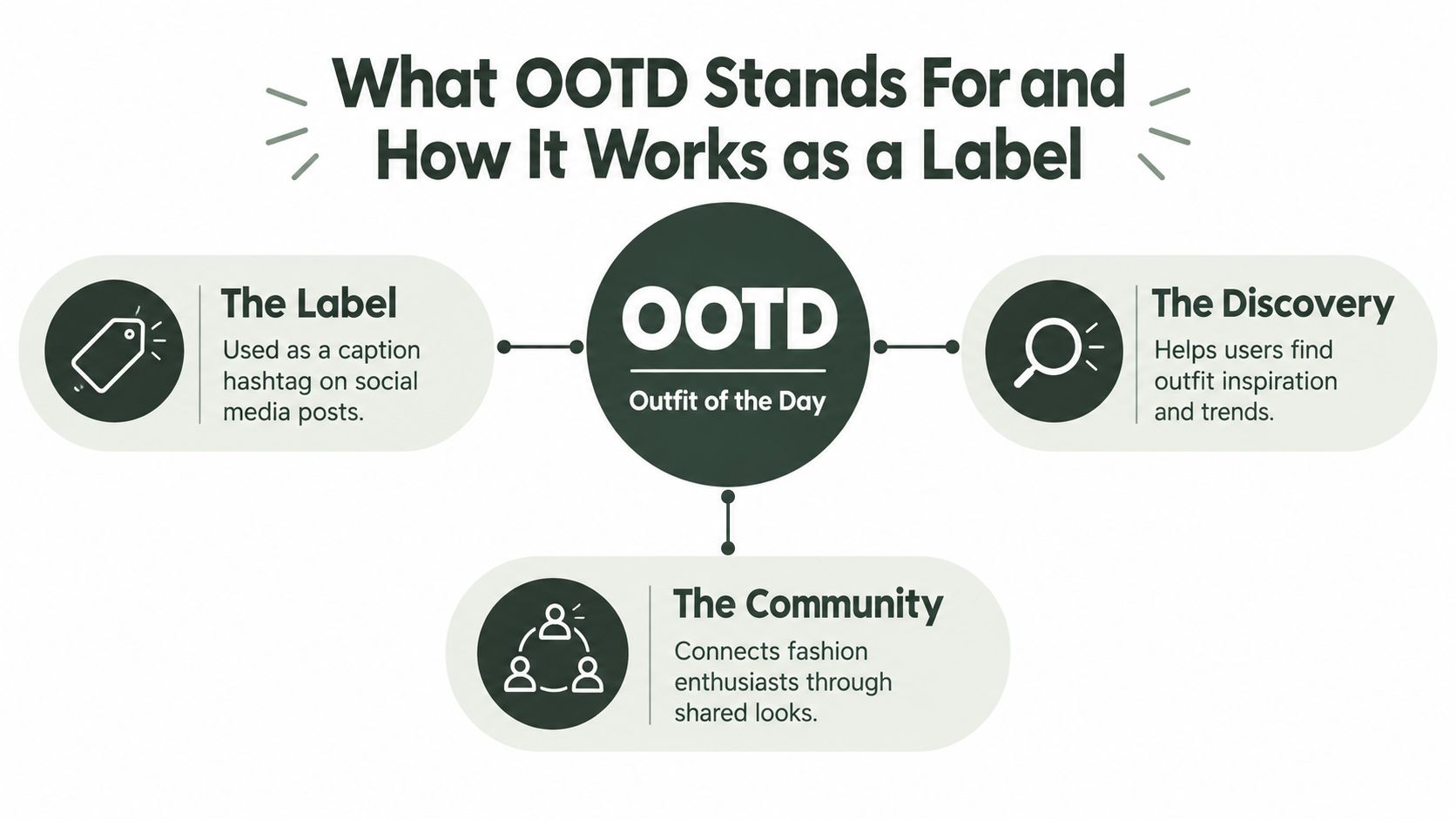
The label gives the post a clear subject
A caption can use OOTD in several natural ways:
- Simple identification: “Today's OOTD is built around a linen shirt.”
- Series naming: “OOTD 04, relaxed layers for a rainy commute.”
- Search-oriented tagging: “Neutral weekend look, #OOTD.”
- Community participation: “Sharing today's OOTD with a focus on rewearing basics.”
The label does not guarantee attention, and it cannot replace useful caption text. It fits best when the outfit remains central. If clothing appears only in the background of a restaurant post, OOTD sends a less accurate signal.
For creators, the term makes a post recognizable at a glance. For brands, it can organize recurring styling content while leaving room for product details, demonstrations, or AI-assisted concepts. For viewers, it offers a familiar route to outfit ideas. Its meaning stays constant, even as the content workflow moves from captioned photos to videos and interactive styling formats.
Where OOTD Came From and Why It Stuck
A single outfit photo once needed a blog post or forum thread to reach an audience. OOTD shortened that process. The label gave a personal style post a recognizable subject, much like a file name tells you what a document contains before you open it.
OOTD moved from early online fashion communities into wider social media use because it describes a repeatable behavior in a compact phrase. Its meaning is easy to understand across feeds, even when the surrounding caption is brief. The shorthand also leaves room for the creator's own styling idea, occasion, or point of view.
A historical timeline places the hashtag's first appearance on Twitter in 2009, followed by wider use on Instagram in 2011 and trending status there by 2012, as recorded in Dictionary.com's history of OOTD. These milestones mark a change in personal style publishing. Creators could present a look with one image and a short label, rather than building a full article around it.
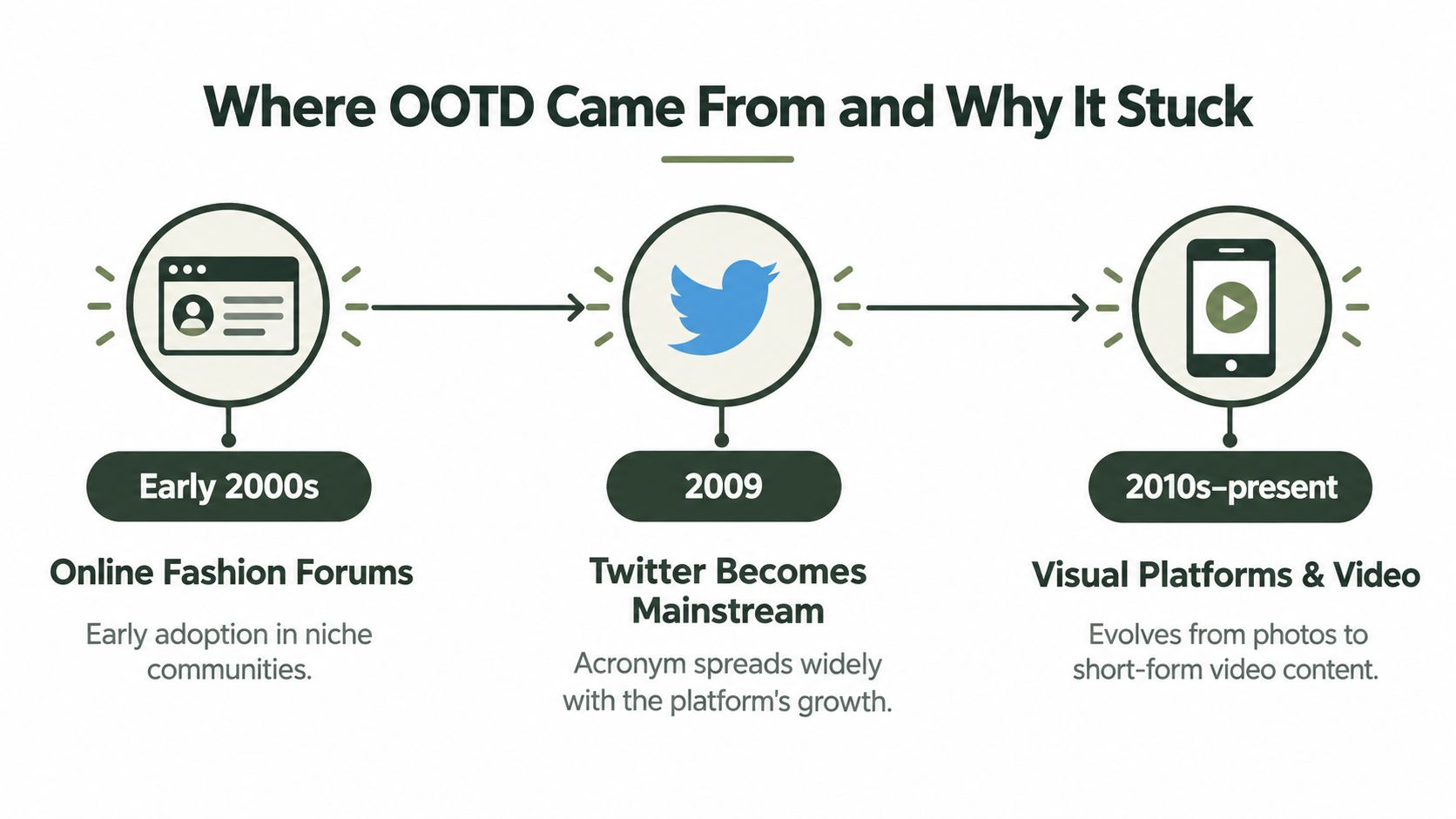
Why a simple abbreviation endured
OOTD works because different participants can use the same label for different purposes:
- Personal documentation: Someone records a daily outfit for friends or followers.
- Style discovery: Viewers look for ideas by mood, season, occasion, or garment.
- Creator publishing: Bloggers and influencers build a recurring editorial series.
- Commercial presentation: Brands show how a garment works within a complete outfit.
The format also changed with the media around it. It began mainly with still photographs, then expanded into movement, transitions, voiceover, and spoken styling advice. In a video-first workflow, OOTD can name the concept while the opening hook, outfit change, styling demonstration, or AI-assisted look supplies the narrative.
That shift matters for 2026 creators and brands. A photo caption treated OOTD as a label. A short video treats it as the starting point for a sequence. Creators planning repeatable fashion formats can apply a broader viral content framework, using the tag to identify the category and the hook, visual order, styling idea, and audience relevance to shape the content.
How to Use OOTD in Captions Hashtags and Everyday Posts
You open a fashion video and see a quick outfit reveal. If the clothing is the clear subject, OOTD gives viewers an immediate category. Add one useful detail, such as the occasion, styling choice, garment pairing, or problem the look solves. The label identifies the format, while the detail gives people a reason to read, save, or respond.
A photo caption could read, “Today's OOTD, a navy knit with wide-leg trousers for a polished office look.” A short video might say, “OOTD transition, one blazer styled for a casual afternoon.” “OOTD #fashion #style #clothes” is accurate but too broad to explain the look. Specific wording works like a signpost, guiding viewers toward the post's actual idea. For more guidance on how to write captions that pair OOTD with specific styling details, connect the label to a clear visual or styling point.
Match the treatment to the platform
The same outfit can take different forms across channels:
- Instagram: Use OOTD as a natural phrase or hashtag, then name the styling idea in the caption.
- TikTok: Place the outfit concept in opening text or spoken narration, especially when the video includes a transition.
- Pinterest: Write searchable titles and descriptions that identify the occasion, garment, or style.
- YouTube: Include OOTD in a title or description when the outfit appears in a vlog, lookbook, or styling tutorial.
A hashtag group should support the post, not bury it. Pair the broad OOTD label with accurate descriptors such as workwear, layered outfit, occasion dressing, or capsule wardrobe. A popular tag still weakens the post when it describes something unrelated.
A practical publishing check
Before posting, review five points:
- Subject: Can viewers tell quickly that the outfit is the main content?
- Specificity: Does the caption say more than “look at my clothes”?
- Accuracy: Do the hashtags match the garment, occasion, or style?
- Format: Does the opening frame or image show the outfit clearly?
- Review: Has someone checked brand fit, product details, and final wording?
Timing can be tested with guidance on the best time to post on Instagram and the best time to post on TikTok, but scheduling should not replace clear creative choices. Crowbert is designed as an autonomous AI agent that can draft, adapt, schedule, and publish social work end to end, while keeping a human approval step before publication. Teams can then use an engagement rate calculator to interpret responses instead of judging a post by views alone.
OOTD hashtag scale across platforms
Public tracking shows that OOTD remains a widely recognized, active label. The measures below come from different periods and sources, so they should be read as context rather than directly comparable results.
| Platform and metric | Volume | Source period |
|---|---|---|
| Instagram #OOTD posts | More than 80 million | By 2016 |
| Instagram #OOTD posts | 404 million | 2022 reporting |
| Instagram #ootd posts | 368,392,205 | Tracker report |
| Tracked-platform uses in the last seven days | 872.9K | Tracker report |
The scale explains why the label remains useful for discovery. It does not mean every post needs the broadest possible tag. A focused caption and accurate supporting hashtags make the outfit easier to understand, whether the post is a still image, a transition, or an AI-assisted styling format.
OOTD Examples Variations and the Shift to Video
An OOTD used to suggest a posed outfit photo. Today, the same label can describe a sequence with a quick reveal, a narrated styling decision, a wardrobe challenge, or a virtual preview. The content has changed from a single visual record into a small production workflow.
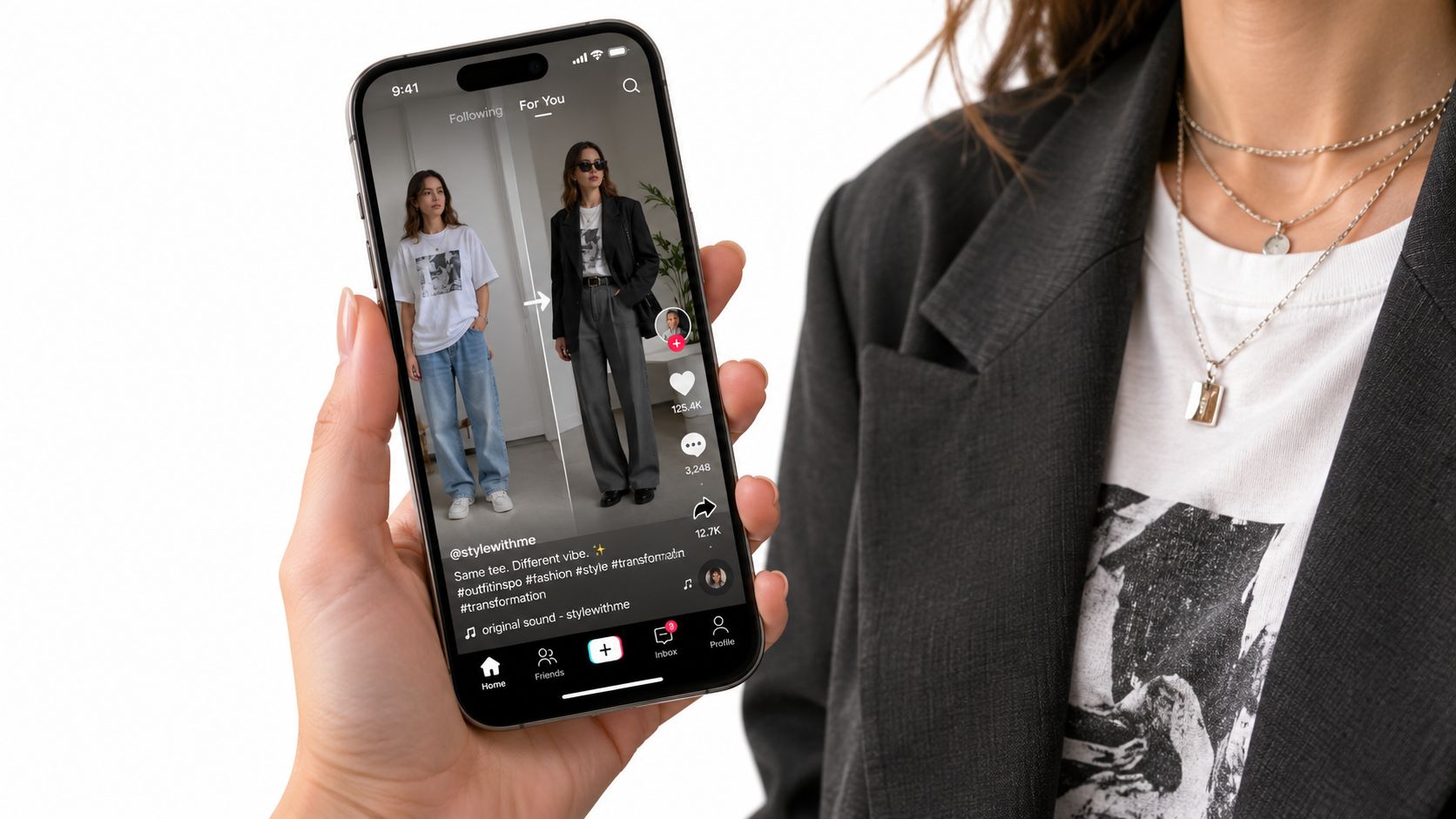
A photo OOTD might show a complete outfit beside a short note about fit and accessories. A video OOTD can show the starting garment, the change of shoes, the addition of a jacket, and the final look in motion. That movement gives viewers more information about proportion, drape, and how the pieces work together outside a static pose.
The shift also affects production choices. A brand creating video-first OOTD content needs vertical framing, a clear first moment, readable on-screen text, and a sequence that makes the styling change easy to follow. Trend audio may support the edit, but the garment should remain understandable without relying on sound.
For teams exploring generated fashion motion or virtual styling previews, an AI clothing video generator can be a useful resource for considering how still product assets might become animated concepts. The output still needs human review for garment accuracy, representation, claims, and brand suitability.
Variations that change the emphasis
OOTN, or “Outfit of the Night,” narrows the occasion to evening wear. “Workwear OOTD,” “travel OOTD,” and “festival OOTD” add the audience context that the broad abbreviation leaves open. These variations don't replace OOTD. They make the subject more specific.
A useful workflow separates the content idea from the label:
- Start with the viewer's question, such as how to style one jacket.
- Choose the visual proof, such as a transition from casual to polished.
- Add the relevant OOTD wording after the format is clear.
- Review the final asset for fit, color, proportions, and product accuracy.
Crowbert's short-video creation guidance is relevant when a team turns an outfit concept into a repeatable video format. Its Creative Studio supports image, short-video, and copy generation, while the publishing workflow keeps people responsible for approving the final post.
The result is a more useful definition of OOTD in 2026. It still means “Outfit of the Day,” but it can now describe the content system around showing, explaining, and adapting a look, not only a caption beneath a still image.
Frequently Asked Questions About OOTD
Can OOTD mean something other than Outfit of the Day?
In fashion and social media, OOTD means “Outfit of the Day.” In rare contexts, the same letters may have another meaning, so surrounding words matter. A clothing post, message, or styling video usually makes the fashion meaning clear.
Is OOTD understood outside fashion circles?
It is widely recognized in social settings where people share outfits, styling ideas, and shopping content. A photo or video can provide enough context for someone unfamiliar with fashion shorthand. In a formal message or mixed audience, spelling out “Outfit of the Day” avoids confusion.
Can I use OOTD in a text message?
Yes. “Here's my OOTD” sounds natural when you send a photo of what you are wearing. Use the abbreviation with people who already understand social shorthand. For a professional or unfamiliar audience, write the full phrase.
Does OOTD have local-language equivalents?
Many language markets use their own everyday expressions for an outfit of the day. OOTD remains visible because it works like a shared label across social content. Interpretation still varies by audience, platform, and creator culture, so visual context helps.
Is OOTD still relevant in 2026?
Yes, but its role has changed. OOTD began as a caption or hashtag for a still image and now also describes short-form videos, styling explanations, outfit transitions, and AI-assisted previews. The label remains useful when it tells viewers what the content demonstrates, such as building several looks around one item.
For creators, the workflow resembles a fitting-room mirror that also explains the choices. A post can show the outfit, demonstrate how it moves, answer a styling question, and invite viewers to consider a purchase. Brands can use the same structure to plan captions, video variations, approvals, publishing, and performance review. Crowbert's pricing page describes support for creation, scheduling, publishing, engagement, and reporting, with human approval before publication.
OOTD therefore remains more than a static hashtag. It identifies a content idea that can move from photo to video and from manual styling to AI-assisted production, while people still check garment accuracy, representation, claims, and brand suitability.
Crowbert can help turn OOTD ideas into approved, platform-aware content, including captions, short videos, scheduling, and performance reporting. Visit Crowbert to build a consistent fashion-content workflow while keeping human control over what goes live.
About the Author
The team behind Crowbert building AI-powered marketing tools that help businesses of all sizes create professional campaigns, manage social presence, and drive real results.


